Deep foundations make their keep when near-surface grounds can certainly not bring the weight. Abstractly, helical piles, resistance heaps, and micropiles can all provide capability. In the business, the appropriate option depends on what exists underneath, exactly how it varies across the site, and exactly how the design asks for that load be taken care of with time. Ground examination is actually the filter that transforms a catalog of possibilities into a functional design. Skip the homework as well as you risk stacks that twist out early, resolution that shows up after the residents move in, or installment prices that spiral when the team attacks a challenging layer nobody anticipated.
This quick guide distills exactly how to consider and also translate ground inspections that update helical pile as well as resistance pile choices for commercial foundation repair as well as brand new building. It relies on the designs observed around clay containers, split filler, glacial tills, seaside sands, and also the periodic issue little one like retractable loess or karst. I concentrate on the inquiries that matter to designers and also contractors that cope with the repercussions, consisting of instances where commercial micro pile installation or even commercial helical pile installation is the right solution, as well as others where commercial resistance pile installation or even helical tieback anchors bring the day.
The huge three: stratigraphy, strength, as well as variability
Pile variety flights on 3 backbones. To begin with, stratigraphy, the pattern of levels as well as their densities. Second, strength and also hardness, which control ability as well as negotiation. Third, irregularity, both upright and lateral. You require sufficient portrayal to confidently reach a bearing stratum or even propel sufficient skin rubbing in a repeatable way. For helical piles and helical anchors, include a 4th aspect, twist relationship, because installation torque is actually made use of as a real-time stand-in for capacity.
A ground profile page that appears uncluttered on a single log can easily still misdirect. In urban backfill, clay-based lens wedge out over tens of feets. In river patios, thick rocks pockets interrupt clean sands. The examination carries out not need to splurge, however it must solve the decisions you require to make: coil diameter and arrangement, pile style and diameter, recommendation elevation, deterioration defense, as well as setup tools requirements.
Choosing exploration procedures that match the web site and the questions
For small commercial work, a set of borings along with Basic Infiltration Tests (SPT) might fasten the plan. On much larger or additional variable internet sites, you acquire assurance with extra borings, Conoid Penetration Testing (CPT), and discerning sampling for lab tests. The mix depends on the ground regime.
SPT borings provide continuous dirt summaries and also draft counts. They likewise provide you samples for lab testing and for affirming whether that "very dense sand" is really a sandy gravel along with cobbles that may chew up helix plates. That claimed, SPT is actually noisy in gravelly dirts, and also blow counts may stage in dense layers where CPT shines. CPT gives continual recommendation protection, sleeve abrasion, as well as often opening stress. The constant profile page is vital for helical pile format given that coils need to bear in uniform, suitable soils rather than linking a gentle lens.
If you presume gentle clays or organics, Shelby cylinder examples are worth the coordinations. Unconfined compressive strength and also Atterberg limitations give you index buildings and undrained toughness, which matter for temporary building lots and also uplift scenarios. In sands and silts listed below the water level, waste examinations in CPT can clarify whether you are actually taking care of contractive silts vulnerable to liquefaction, which definitely influences stack style and also uplift factors. For projects along with lateral lots requirements or even prepared helical tieback anchor installation, obtain good enough data to determine p-y arcs along with assurance, whether with in-situ tests, correlations, or a blend.
An experienced staff will definitely also hunt impediments. Ground-penetrating radar or utility locates capture large energies, however the boring logs tell you whether there are manmade loaded with brick, ballast, or ashes, which can easily thwart helical piles or even demand pre-drilling. In past industrial parcels, I have observed steel fragments in fill quit a helical within pair of feet. The backup program is pre-drilling or even changing to steered steel resistance piles in the obstructed zone.
What the logs should explanation for helical piles
Helical heaps as well as helical anchors transform twist to central ability, guided through relationships in between installation twist and also best protection. Those connections think the helix layers advance in to soils that shear predictably. If you station a helix throughout a disposable lens as well as a heavy lense, torque analyses come to be raucous. That is actually certainly not a simple machinery concern, it demonstrates irregular capacity along the coil stack.
The boring and also CPT records need to tell you 3 things with adequate settlement to prepare the helix geometry:
- The intensity to an ongoing, experienced bearing stratum that may suit the helix sizes organized. For moderate to intermediate loads, that could be medium heavy to dense sand or rigorous to incredibly stiff clay-based. For much higher bunches, the intended may be actually heavy sand and rocks or weathered stone. The secret is connection. A slim, hardpan layer over soft clay-based is a snare, as the coil may perch somewhat on the hardpan as well as somewhat in the clay. The thickness of improper layers that should be actually removed to avoid adverse skin abrasion as well as downdrag where it would damage functionality. As an example, compressible organics as well as loosened silts ought to be actually bypassed so the coil overlays bear deep sufficient to lessen resolution from seasonal wetness or even additional charge changes. Groundwater depth and also periodic fluctuation. Uplift range in sands feels to saturation, as well as twist readings may shift along with opening tension. If groundwater sits at 5 to 8 feets but rises seasonally, prepare for the wet condition.
Torque-to-capacity aspects (Kt) array frequently from 8 to 12 in many sands and also clays when using inch-pound twist units per foot of ray location similarity. That array is certainly not a certificate to guess. Usage previous local projects and bunch examination data coming from the same installer when feasible. On a distribution center in antarctic till, our determined Kt was actually closer to 7 due to crushed rock and patches that boosted torque without symmetrical central capability. Without the previous lots exams, our company would certainly possess underpredicted the number of piles needed to have by roughly twenty percent.
What the logs must explanation for protection piles and micropiles
Resistance piles, including steel push piers for commercial foundation stabilization, rely on hoisting against the establishment and setting in motion side bearing or even rubbing till refusal. Their performance hinges on finding a layer with adequate capacity to take the tons without too much resolution. The dirts course must map the depth to rejection and the variability throughout the footprint. If you organize commercial resistance pile installation under a slab-on-grade along with bad access, you additionally need to recognize whether the press pathway features impediments like clutter coatings, because those may bogus an early "rejection" and cause underperforming piles.
Micropiles put up with even more. Along with micro pile or micropile installation, you can punch by means of cobbles, particles, and even weather-beaten rock, then grout connect into competent strata. The tradeoff is actually cost and the requirement for cement quality assurance. Ground information should define the connect zone as well as the awaited drilling energy. In quite loosened sands listed below the water level, create provisions for casing or drill fluid to avoid caving. In delicate clay-baseds, represent sidewall leisure which minimizes connection unless you make use of pressure grouting. For high seismic locations with liquefiable levels, a micropile's efficiency depends upon grouted connect listed below the liquefiable horizon, which the CPT as well as lab information should delineate.
Integrating construct requirements: axial, uplift, and lateral
The ground examination is actually simply half the story. Load collection is a handshake between ground and establishment. For commercial foundation repair and structural foundation repair, inquire 3 concerns ahead of time. To begin with, are bunches initially central squeezing with moderate uplift, like for pillar retrofits, or exists notable uplift and side demand as in cover columns or maintaining walls? Second, what are the satisfactory resolutions, both total and differential? Third, exactly how are going to lots be offered: braces on existing grounds, brand-new heap hats, or even tieback anchors by means of walls?
Helical heaps commonly beam where uplift issues. Coil geometry provides reliable flexible protection without lengthy embedment. Helical tieback anchors function properly in overconsolidated clay-baseds and thick sands behind basement wall surfaces and also earth-retaining structures. If the geology advises loose packs or even granular grounds along with a perched aquifer, proof screening of tieback anchors becomes necessary. For lateral tons, helical piles along with bigger stems or battered configurations may assist, but the soil p-y response controls. In soft clay-baseds, side capability is reduced unless you push deeper or improve space to propel more soil.
Resistance heaps, specifically steered steel water pipes or H-piles, offer reliable compression in dense levels and may be reduced to do work in tight retrofits. They are less effective in uplift unless you include limits or even utilize tension-only components. Micropiles can be developed for mixed axial and second capacity when canvassed by means of inadequate grounds and also adhered in to rock or even thick coatings, creating all of them a go-to for seismic retrofits of existing columns where the geometry is constrained.
Corrosion as well as resilience judgments
Subsurface chemical make up changes the calculus. If resistivity falls listed below about 2,000 ohm-cm as well as sulfates or even chlorides run high, prepare for rust defense. For helical piles and helical anchors, that may indicate hot-dip galvanizing, more thick wall rays, or maybe cathodic defense for vital structures. For micropiles, the grout cover as well as, if required, epoxy-coated or stainless steel support minimize risk. The examination needs to consist of a minimum of a basic rust set: pH, resistivity, sulfides, chlorides, as well as sulfate web content on depictive examples, plus groundwater if present.
One instance: on a coastal commercial foundation repair where brine infiltrated a superficial sand lens, basic galvanization on helical piles will have been marginal for a 50-year service life. The dirt data made the scenario for duplex devices on the shafts as well as stainless steel hardware over quality. That selection sets you back more in advance, but it prevents mid-life remediation that interrupts operations.
Settlement: certainly not simply carrying capacity
Capacity inspections do not finish the account. Numerous business properties may endure just approximately 0.5 to 1 inch of complete settlement and 0.25 to 0.5 in differential throughout regular column spacing. If ground hardness is reduced in the top strata, long stacks that cancel deep might still view lots dropping, especially under sustained service tons or dampness changes. Swelling clay-baseds complicate matters. The inspection ought to characterize plasticity indices as well as suction actions where widespread dirts are reckoned. If screening shows high masterpiece clay-baseds in the uppermost 10 to 15 feets, take into consideration sleeving helical piles with the energetic area or utilizing micropiles along with isolation sleeves to decouple activity. For protection turn in reactive clay-baseds, deriving braces have to also be detailed to prevent uplift on the building during the course of periodic heave.
On a mid-rise clinical workplace retrofit, CPT presented a gentle clay-based crust over tight clay at about 18 feets. Helical piles put up along with 2 helices at 10 and 12 ins executed well in squeezing tests, but the negotiation study flagged possible in season action in the upper crusting. Our company modified to a three-helix configuration with the most affordable coil at 22 feet to drive the neutral airplane listed below the energetic area. That chump change maintained lasting vertical movements within 0.25 inch throughout the bay.
When to choose helical piles
Helical stacks provide fast setup along with low resonance, a primary advantage for internal retrofits and also tight metropolitan internet sites. They succeed when the ground account includes experienced sands or even stiff clays within 15 to 40 feets, when uplift resistance is actually required, and also when installment twist could be reliably associated to capability. The tools footprint is actually small, and also teams can easily carry out commercial helical pile installation by means of doorways and also inside energetic facilities.
Their restrictions appear in cobbles, boulders, and rubble loads where twist spikes without true ability increase. Thin challenging lens interbedded with soft levels also complicate performance, as helices may seat in a lense that lacks sidewise constancy. Pre-drilling can easily address obstructions but wears down the torque-capacity correlation and also incorporates expense. For high loads over, point out, one hundred to 150 kips every turn in challenging soils, helicals may obtain uneconomical matched up to micropiles or steered solutions.
When protection stacks bring in even more sense
Resistance piles and driven pipeline piles hold substantial compression bunches as well as operate effectively where a difficult bearing stratum exists at manageable intensity. In underpinning requests for commercial foundation stabilization, hoisted steel heaps interact fast, make use of the structure as reaction, and provide a substantial gauge of capability through jacking stress and action. They carry out certainly not call for the same twist correlation as well as may infiltrate fills that frustrate helicals. If the building setup makes it possible for a clean bunch road into the underpinning braces, commercial resistance pile installation can easily minimize schedules.
Their weak spots include uplift inability and also the risk of untrue rejection in particles. The geography ought to direct contingency, such as pre-drilling through understood filler coatings or even switching to a small-diameter driven pipeline. Sound and resonance can be concerns near delicate operations. In incredibly soft profiles without clear bearing level, resistance piles might chase after deepness, pushing the economics toward micropiles.
Where micropiles are the best tool
Micropiles succeed in three shapes: deep-seated or even irregular competent strata, blockages as well as rocks, and also higher combined tons where rigidity matters. They can be put up with low-clearance rigs for interior job. Along with tension grouting and enough connection length, a micro pile may provide high central capacity as well as good seismic performance. Coring through weathered stone or even aged bases is actually regimen work with seasoned teams. For projects where helical piles would need three or four coils and also still deal with cobbles, or even where resistance heaps may not discover very clear refusal, a micro pile course purchases on its own in reliability.
The tradeoffs are cost, cement QC, and also schedule. Anticipate to examine grout durability, monitor intensities and stress, as well as proof test an amount of stacks. Where groundwater circulations, attention to inspecting tapes and also tremie strategies prevents washout and spaces. When the soil examination presents variable coatings of filler, sand, and also clay-based over thick antarctic till at 35 to forty five feet, micro pile selection commonly steers clear of improvement orders throughout installation.
Designing the examination program around stack decisions
Start with the decision plant. If the job leans toward helical piles along with possible helical tieback anchors, program CPT soundings across the impact at a spacing that records lateral improvements. Include a handful of SPT borings along with testing for mark examinations and oxidation. If protection heaps or micropiles are actually most likely opponents, feature borings that reach refusal or the awaited connection area, and a minimum of one uninteresting every distinct structure airfoil or even bunch area.
I aim for enough records to confidently specify heap idea altitudes as well as coil bundles along with a safety frame of regarding 5 feet for helical piles, as well as to size connect areas for micropiles along with verified cement homes. For tieback anchors in retaining job or cellar wall structures, examination a minimum of a couple of sacrificial anchors in the governing materials to calibrate concept rubbing in the field. Where foundation crack repair coincides with groundwork, inspect whether differential dampness or even pipes cracks generated localized conditioning; one boring close to a fracture as well as one in an unaffected location can easily reveal the differential ailments steering the distress.
Quality command during the course of installation, tied back to the ground model
Good dirt data strengthens the program, yet area QC ties the loop. For helical piles, record twist versus depth in one-foot increments, and also banner places where twist spikes all of a sudden. If you observe torque plateauing at market values below the intended yet the dirt model forecasted greater, look at switching over coil arrangement or even raising to the next proficient layer. Lots screening a subset, also two to three heaps, pays dividends when loads are important or even ground irregularity is actually higher. The exam results fine-tune the Kt factor for the site.
For protection heaps, record mounting tensions, movement versus tons, and also refusal requirements. If tensions rise dramatically in a shallow coating that ground logs fixed as junk stuffing, pre-drill the next area to stay clear of false rejection. For micropiles, keep track of boring power, grout volumes, and rejection hints. Proof-test at least 5 percent of stacks where possible. Combining setup information along with the dirt logs makes an as-built geotechnical narrative that details functionality if inquiries arise later.
Edge scenarios worth anticipating
Collapsible grounds including loess can shock helical piles. Torque appears enough in a dry, metastable condition, therefore drops after wetting, which reduces ability as well as may cause settlement. Right here, intention below the retractable area as well as look at post-installation wetting examinations on sacrificial heaps. Connections from plain installation can mislead.
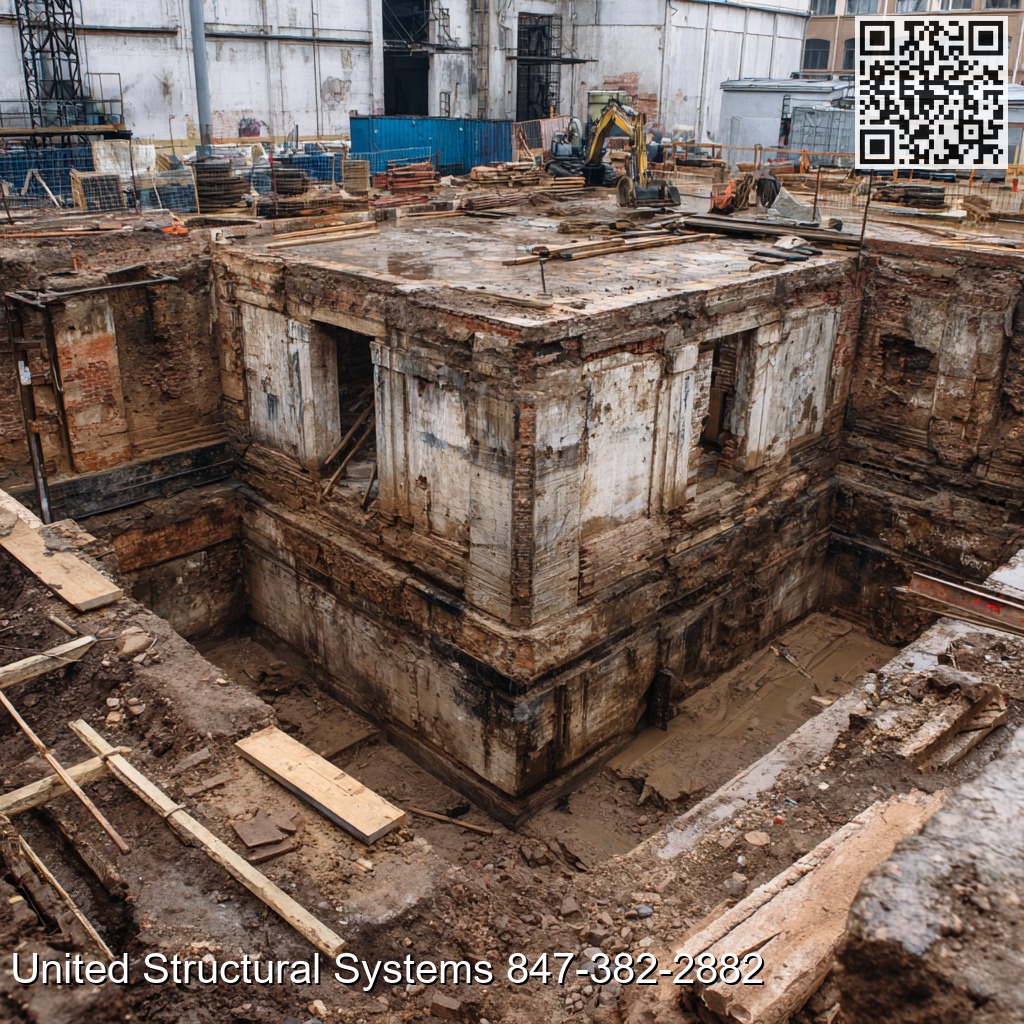
Karst as well as removed rock problem every pile kind. Micropiles with pressure-grouted bound zones and larger cases can extend tooth cavities, however you should describe the deepness and also side degree, which might demand geophysics or even additional borings.
Expansive clay-baseds are worthy of sleeves on helical shafts and also information interest to braces for protection stacks so the establishment remains neutral through heave patterns. If screening yields high PI and suction potential, you may define isolation sleeves that reduce shaft adhesion in the energetic area as well as shift bunch move deeper.
Liquefiable sands alter uplift and also lateral functionality. In these regions, helicals may need much deeper embedment or even larger helix diameters, and tiebacks need to secure listed below the liquefiable coating. Micropiles adhered in thick sand or stone listed below the crucial deepness offer a more strong foundation for deep foundation repair in seismic regions.
Practical budgeting and also phasing
A little industrial project may exist along with a couple of borings at 25 to 40 feet as well Go here as one CPT, plus restricted laboratory tests. Larger footprints or even changeable stuffing validate a network of CPTs and three to six borings to 50 to 80 feet. Finances like 1 to 2 percent of groundwork price for subsurface exploration and testing, though internet site conditions might push that higher. That portion is cheap insurance coverage against adjustment orders in the course of commercial helical pile installation or commercial resistance pile installation, especially where accessibility is actually minimal and also downtime is actually costly.
Phase the course. Preliminary borings as well as CPTs prepared the concept. If you anticipate helical tieback anchor setup, feature early disengagement examinations. If micropiles reside in play, drill one or two captain examination stacks and bunch exam to confirm bond stress and anxiety beliefs just before complete manufacturing. Carry the installer right into the preconstruction conference to settle on standards for switching methods when problems diverge from the logs.
Repair cases: connecting splits to soils
Foundation crack repair service usually delivers us to a building years after building and construction, with restricted as-builts as well as a mix of mythology and also opinion. Grounds screening may separate plumbing-related conditioning, in season shrink-swell, and also long-term debt consolidation. A crack pattern that widens at the top near edges may lead to resolution in the perimeter bearing under a downspout settlement. Because case, shallow soil improvement and also drainage can easily help, yet repeated actions propose underpinning with helical piles or even resistance piles to establish a stable bearing. If internal pillars have cleared up, and also the ground logs show compressible silt lens under the slab, micropiles threaded with primary holes use a tidy structural foundation repair pathway without massive demolition.
Tiebacks enter play where basement wall structures bow from sidewise dirt tons or even hydrostatic stress. Prior to specifying helical tieback anchors or various other tieback anchors, exam a couple of probes in the backfill as well as native ground responsible for the wall. If you locate loose backfill that prolongs deep, longer anchors or a button to deadman anchors past the zone of impact might be important. Anchors set up into thick sand or even stiff clay behind the active wedge perform accurately and may be load verified during installation.
Bringing it with each other: a decision structure that appreciates the ground
The most effective projects read through the ground and also pick a strategy that teams up with it rather than versus it. Helical piles are swift and sophisticated in suited dirts, especially when uplift and also reduced disturbance concern. Protection stacks supply robust compression to rejection with marginal website disorder when an experienced level is within reach. Micropiles adapt to barriers as well as depth, delivering high capacities where the profile page demands it. Helical anchors and also helical tiebacks deliver reliable lateral as well as flexible protection when anchored in the right materials.
None of these options ought to be made in a vacuum cleaner. A slim, well-aimed dirt inspection supports the selection. It clarifies the bearing perspectives, the active dampness zone, the corrosivity, as well as the irregularity that can pump up expenses if uncovered late. Set that along with installment QC and also, when necessitated, a handful of load exams. The outcome is not merely a pile that holds a number on paper, however a base remedy that goes with the internet site, the property, and the facts of construction.
 Ask ChatGPT
 Ask Grok
 Ask Perplexity
 Ask Claude
 Ask Google AI
 Ask You