Helical heaps have gotten their place in commercial work because they incorporate expected actions along with rapid setup. You obtain urgent ability readings coming from twist connection, as well as you can mount in limited urban sites along with minimal spoils. Still, every expert installer as well as developer understands the very same truth: the real proof of a deep structure is in the bunch test. On a medical center enhancement in clay-based, on a warehouse slab where negotiation tolerances are petty, or even on a maintaining wall using helical tieback anchors, you merely get peace of mind when the piles or even supports reveal their efficiency under measured load.
This write-up concentrates on bunch testing procedures adapted to commercial helical pile installation as well as helical tieback anchor work. It also touches the sides where micropiles, protection heaps, and other deep foundation repair methods comply with the same demand for proof. The objective is sensible guidance: what to check, exactly how to examine it, and also exactly how to translate the outcomes without receiving misguided through sound in the information or unlikely expectations.
Why our experts test, also when torque looks good
Helical stacks have a convincing purchases sound: set up along with an adjusted drive head, screen torque, and also connect to ability. In well-maintained sands as well as sands, the relationship typically stores within 10 to twenty percent, which is outstanding for development. Commercial helical pile installation, though, rarely happens in book strata. Our team see layered loads, varved clays, sat on groundwater, and energy hallways that have actually disturbed the dirt over many years. Torque spikes prevail, and gentle wallets may conceal in between tight horizons.
Load screening verifies three things you may not see during setup. To begin with, the actual lots move system at the coils and along bum rap. Second, creep actions in time, which matters when a commercial foundation stabilization plan need to live under a delicate superstructure. Third, the architectural functionality of the device on its own: couplers, stems, grout columns in crossbreed bodies, and caps.
I remember a retail slab-on-grade retrofit where twist suggested fifty kips per heap. The load exam showed reasonable best capacity near that market value, but the activity at service weight was actually extremely sizable for the slab. The repair included utilizing much larger lead sections with deeper helices to decrease curvature, not merely chasing after much higher twist. Without a load test, our company would certainly possess complied with the letter of ability and still let down the proprietor along with piece curling as well as dividing cracking.
Choosing a test style that fits the project
Static central compression and tension examinations are the backbone for helical piles and helical anchors. Lateral examinations are less common but crucial for signs, tower manners, and some cover supports. For tieback anchors, proof as well as efficiency exams under pressure define the program. Dynamic tests appear a lot more along with steered stacks than click here along with helicals, and while you can function quick bunch exams on micropiles, helical devices react better to sustained static packing since displacement and also creep under continual lots are the essential criteria.
For commercial resistance pile installation as well as micropile installation, static exams adhere to similar logic, yet the instrumentation varies. Micropiles commonly welcome stress evaluates to separate connection region coming from ground anchor area. Resistance heaps, especially push boat docks utilized in structural foundation repair, take advantage of on-jack evaluates that looking glass company circumstances during underpinning.
When managers request value design, the seduction is to reduce load screening initially. That is an incorrect economic climate. A single effectively performed performance exam on a propitiatory helical pile, plus verification exams on a portion of creation units, often minimizes the general danger as well as may also enable logical decreases in component or even depth that conserve greater than the exam costs.
Standards, standards, as well as functional thresholds
Most industrial requirements reason ICC-ES approval requirements, ASTM criteria, as well as geotechnical recommendations. For helical piles and helical anchors, the usual endorsements feature ICC-ES AC358 as well as ASTM D1143 for squeezing, ASTM D3689 for pressure, as well as ASTM D3966 for side. Tieback anchors typically adhere to PTI suggestions for testing as well as lock-off methods. These documentations set out step filling, hold times, as well as approval standards for action and creep.
Serviceability limits are as crucial as greatest capability. For commercial foundation repair and also new development, solution bunch activity restrictions may range coming from 0.25 to 0.5 inches at total style load, in some cases tighter for slab-supported tools. Creep requirements at the final grip action usually restrict movement to a handful of thousandths of an in every moment over a defined time period, often 10 minutes. The specific amounts get tuned to predict requirements, dirt style, and risk tolerance.
One sensible rule of thumb: if you are putting up in delicate clay-baseds along with assets indices near 0.7 or even much higher, emphasize longer grip time frames. Clay-based requires opportunity to show its shades. Sands respond swiftly, yet can exhibit relaxation. Silts sit in the ambiguous middle. Your method must demonstrate the dirt's opportunity reliance or even you may pass an examination that later comes to be a settlement deal claim.
Equipment that maintains records honest
Load testing gears are actually only comparable to their references. The response frame need to be tense and also secured in such a way that does certainly not contaminate the dimension. For compression exams on helical piles, this usually means a test shaft linked to neighboring response stacks inserted deep enough to avoid effect coming from the exam pile. In strain, reaction frameworks get hold of onto supports or deadmen. For helical tieback anchor testing, the reaction is commonly the wall surface on its own or a steel strongback along with enough spreader beams.
Digital load tissues as well as movement transducers have actually become the rule in business work, certainly not simply nice-to-have. A 100-ton hollow ram joined a calibrated stress transducer is actually fine if you possess a clean calibration contour as well as validate every gauge just before the test series. Linear displacement transducers placed separately of the port, going through against a corrected referral outside the response region, eliminate the inaccurate action that stems from frame curvature or jack seating. If your data accomplishment body catches lots and variation at 1 Hz or faster, trending and also creep analysis come to be straightforward.
For micropiles as well as protection heaps, you might also incorporate dial determines affixed to a remote reference shaft to cross-check the electronic musical instruments. Verboseness issues when a little analysis can easily sway acceptance. On a courthouse deriving along with resistance heaps, our company found an angled jack port offering high pressure analyses. The dial evaluates said to the genuine story. That little cross-check saved a stack cut-off and also re-drive.
Establishing an exam matrix that gains confidence
On big websites, soils vary. Examining a singular helical turn in the superficial stuffing at the n. side tells you little bit of about the deeper alluvium near the stream. The test source requires to disperse around the site, straighten with the geotechnical profile, and work with each layout variation: stack lead configurations, coil sizes, cylinder measurements, and embedment midsts. When commercial helical pile installation assists both column lots as well as slab bunches, exam both scenarios. For helical tieback anchor service a stepped keeping wall surface, examination the upper and reduced benches considering that surcharge and also dirt thickness will differ.
A common design pairs one or two performance examinations, typically to 200 per-cent of layout lots, with evidence screening on 5 to 10 per-cent of production devices to 133 per-cent. Jobs along with high outcomes or even combined grounds may push performance exams to 250 per-cent and verification to 150 percent. Tieback anchors usually get evidence checked to a lock-off technique, at that point loaded in steps to 120 to 133 percent, along with creep evaluated on top grip. If motion or creep surpasses recognition limitations, look into as well as readjust the layout before proceeding with production.
On a logistics storehouse outside Des Moines, our company worked 3 execution exams on helical piles along with 10-12-14 inch helices. The southerly test struck heavy sand early, and also the ability went beyond the twist estimation through virtually 30 per-cent. The northerly region sat over a silty clay-based level and matched twist connection within 5 percent. The middle area looked normal yet presented noticable creep at 150 percent of style. Our company tightened up solution motion requirements there as well as defined longer coils to reach a reduced pressure horizon, which eventually always kept piece joints strict under forklift traffic.
Step launching that shows genuine behavior
Static bunch tests must stabilize productivity along with diagnostic worth. Stepping too promptly conceals time-dependent movements and can misdiagnose the capability. An audio procedure for squeezing might pack the helical pile to 25 per-cent, half, 75 per-cent, 100 percent, then 133 per-cent, along with 5 to 10 moment keeps at each action as well as longer stores on top. After reaching the maximum exam lots, unload symphonious, securing briefly to capture elastic recuperation. If the requirements asks for a breakdown test, proceed filling in smaller increases until the activity increases without tons increase, or even up until you get to the secure limits of the frame.
For stress, the measures as well as holds are similar. Take note of first seats or bedding-in movement as the connections as well as grout, if any type of, use up resistances. Helical tieback anchors normally follow an evidence examination cycle: chair at a nominal bunch, cycle up to the optimal examination load along with specified holds, at that point return to the lock-off lots. Creep is actually assessed merely at the top tons on a clean request, certainly not throughout cycles, to avoid confusing plastic set with time-dependent deformation.
The have time dispute appears on nearly every task. Some really want five minute keeps for rate, others require 10 or perhaps 60 moments in clay-baseds. My method is actually to line up with the ground. Sands and also gravels, five min has at advanced beginner actions as well as 10 to 15 mins at the optimum are generally appropriate. In fatty tissue clays, double those opportunities. If your variation arc flattens, you may warrant carrying on. If it always keeps sneaking at a measurable price, carry out certainly not dismiss the trend.
Reading the curves without misleading yourself
An excellent load test file narrates. The load versus activity story shows rigidity modifications as coils involve various levels, and the unload path mention ray flexibility versus soil collection. In a tidy result, the very first portion of the contour is actually steep, then it softens as set in motion resistance establishes, as well as lastly it either stage toward failing or remains secure within the solution selection. Creep plots distinct flexible activity coming from time-dependent dirt response.
Look for subtle hints. If the variation hops at reduced lots, look for seating or frame slippage. If creep at 133 per-cent of style drops from 0.005 inches every min to 0.001 ins per minute over the hold, that is actually healthy loan consolidation. If it stays at or even above 0.01 ins per moment, specifically in clay, you are approaching a serviceability restriction regardless of whether utmost capacity is actually certainly not hit. Tiebacks along with too much rebound on dump might possess bed linen slop near the bearing layer rather than problems in the ground. Tidy up the bearing areas as well as retest before altering the design.
Micropiles and resistance heaps inform similar tales with somewhat different trademarks. Micropiles with a long bond size present a steady stiffness rise as even more of the grout-rock interface sets in motion. Protection piles driven for deep foundation repair present load-displacement contours controlled through abrasion along bum rap and often show snap-back on dump if the pile latches in to a stiffer layer at deepness. In each situations, deal with just how the lots transmissions and also whether the noted activity matches the system you expect.
The link between setup data and examination outcomes
Installers often live by torque graphes, and completely reason. Helical torque to capacity connections, calibrated by the certain helix geometry and also shaft kind, create a simple estimate of ultimate protection. A blunder I find is alleviating twist readings as gospel all over mixed profile pages. If the top part partakes stiff silt yet the top coil rides in loose stuffing, you may reach target torque while leaving the upper bearing aspect immature, which harms tightness as well as enhances resolution under company lots. A load exam will certainly reveal this in the early portion of the curve.
Track torque every change, crowd pressure, and also rate of penetration. A consistent twist growth with consistent penetration indicate regular soil. Spikes along with stalls recommend cobbles or clutter. When these signatures associate with the examination site, you gain situation for the activity habits. On a commercial helical pile installation beneath a refrigerator pad, our company viewed terrific twist at shallow deepness. The bunch test felt soft at solution. The repair was rotating deeper to seating all-time low helix in to pure soil, which stabilized the action and also reduced the solution activity in half.
For commercial resistance pile installation, the analog is actually disk stress and also stroke every push. For micropiles, it is actually grout take as well as tremie tension during the course of positioning, plus connection duration and rock socket parameters. If the load examination says a single thing as well as your installation records say an additional, examine prior to you pick a side.
Acceptance standards that perform not container you in
Rigid criteria usually create unnecessary heap replacements. Acceptable recognition for a helical turn in squeezing might consist of a maximum net activity at concept tons, state 0.5 ins, and also a creep price below a defined limit, like 0.01 inches in the eleventh hour of a 10 min hold at 133 per-cent of style. Tieback anchors commonly call for lower than 0.04 ins of movement between one and 10 minutes at the top test bunch, adhered to through secure lock-off. These are instances, not universal worths. Projects along with delicate exteriors or high-precision equipment might require tighter varieties, while mass storing or racks can put up with more.
Remember the field between supreme ability as well as company efficiency. You can easily accomplish higher greatest capability along with tiny coils in dense sand, yet still have much more flexible movement than the construct wants. Larger coils or even deeper embedment increase get in touch with location and lower variation at service. If an exam narrowly falls short a solution motion criterion however shows reduced creep as well as higher supreme safety and security, a moderate redesign typically handles it without junking the heap type.
Tension screening and also the nuances of tieback anchors
Helical tieback anchors act differently than upright heaps. The load pathway goes through the support scalp, along bum rap, and also into the coils settled in the passive area. The totally free size, whether a hassle-free expansion or even a sleeved segment, have to continue to be unbonded near the wall structure to enable lock-off without lots loss. Throughout commercial helical tieback anchor installation, consistent setup angle, coil spacing, as well as intensity behind the theoretical failing plane matter greater than a lot of appreciate.
A sound tieback verification examination cycles the load to the maximum exam amount, holds for creep examination, and then minimizes to the lock-off tons while evaluating flexible recuperation. Excessive non-recoverable motion indicate ground yielding or seating at the head. If the anchor sneaks unacceptably at the top bunch, you might be also near to the breakdown plane or even being in an unstable layer. Stretch the support or readjust the inclination to chase much better dirt. Carry out not count on greater twist alone to fix a geometry problem.
Keep an eye on wall communication. I viewed a service provider condemn a tieback for creep when the strongback dispersed under load, fabricating support action. Independent recommendation beam of lights as well as careful create prevent this. Great testing protects both the installer and also the owner.
When bunch testing complies with repair work work
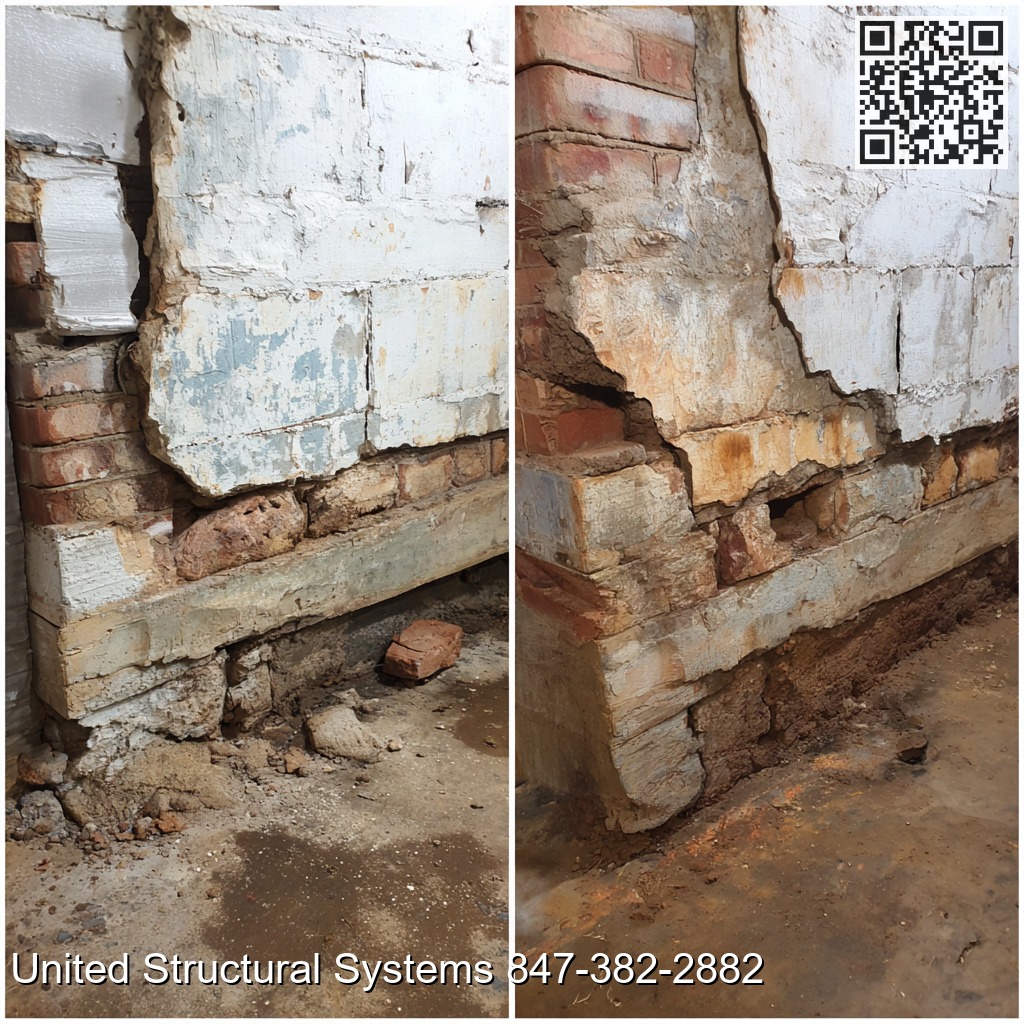
Deep base fixing in business setups rarely gives the luxurious of open space. You are actually operating in basements, under technical areas, or even alongside active energies. For structural foundation repair that uses protection piles or even helical piles, test process require to adjust to limited spaces. Transportable reaction frameworks, much shorter movement jacks, and segmented recommendation shafts keep analyses tidy. Foundation crack repair as well as piece stabilization often connect into this course, since load testing informs just how strongly you can lift or how much lots to move before the framework responds.
I have actually had success utilizing a pilot examination on two or 3 underpinning factors before committing to a building-wide airlift. The test tells you how the footing distributes bunch, exactly how the stonework or even concrete will react, as well as what lift increments the framework tolerates. It can likewise show whether combined ground layers under different gulfs require various stack kinds, for instance using helical piles in sandier regions as well as micropiles where patches stop helical advance.
Documentation that stands later
Commercial tasks reside and perish by their files. A tidy load examination package deal features calibration certificates, installment logs, test methods, uncooked and also reduced data, secret plans, photographs of the create, as well as area keep in minds detailing any kind of abnormalities. When a third-party special inspector indicators off, feature their record. If you deviated from the authentic program, present the engineer's commendation. These files safeguard your crew if issues arise and give functions team a standard for potential modifications.
Many owners right now expect digital deliverables that supply in to their resource monitoring systems. Straightforward measures like naming data through pile ID and also location, adhering to one correlative system, as well as incorporating a brief narrative for each and every exam reduce headaches when an individual takes another look at the task years later.
Lessons profited from the field
- Load exams rarely acquire a second odds. Make the effort to place private referrals as well as validate every gauge before the very first tons measure. A well-maintained first test makes rely on and rates confirmation for the rest. Torque is an overview, not a verdict. Utilize it to guide installment, after that count on lots testing to affirm your beliefs. If the outcomes dispute, determine why, certainly not that is actually right. Helical piles master velocity, however speed lures shortcuts. Keep hold times that match the soil. A 10 moment pause is actually affordable reviewed to a floor that works out a fourth in under occupancy. Cross-train your crew. The installer that knows exactly how lots exam arcs should look will certainly observe an issue during the course of setup as well as correct it before the exam subjects it. Accept that certainly not every stack will certainly be actually excellent. Concept an examination source and acceptance platform that flags outliers without delaying the entire job.
Where other bodies intersect
Commercial micro pile installation, usually led to micropile installation, portions considerably of this screening DNA. Because micropiles depend on grout-to-ground connection, their functionality depends on development quality where you may certainly not observe it. Stationary load tests validate both connect strength and building capacity of bench or even case. Tieback anchors, whether helical anchors or grouted supports, demand the same disciplined screening since their task is actually mostly regarding company activity management over time.
Resistance stacks possess their area in structural foundation repair, specifically when space is cramping as well as grounds allow modern jacking to bunch. Proof screening throughout setup, using the structure as response, confirms the lots each boat dock are going to carry. Supplemental fixed tests on decided on piers, independent of the building, aid calibrate requirements and also avoid overpromising to the owner.
When a venture blends systems, like utilizing helical piles for brand-new columns and micropiles for intensely rich primaries, maintain the screening procedures specific however collaborated. The manager wishes one story concerning efficiency, not dueling charts.
Final notions from an active task trailer
When you run commercial helical pile installation at range, bunch testing comes to be greater than a checkbox. It is your reviews loop. It tells you whether a 12 in best helix need to be actually a 14, whether the embedment requires one more 5 feets, whether the response frame is actually very soft, and whether your team knows the ground properly. It divides a soft handover from an unpleasant settlement deal problem six months later.
The greatest courses tie together 3 strings. The geotechnical document sets expectations for dirt actions. The installation logs grab true ailments. The bunch tests fix up the 2 and create the functionality section. Carry out that, et cetera of the work complies with: commercial foundation stabilization proceeds with peace of mind, structural foundation repair keeps its own line, as well as even the obscure foundation crack repair benefits because the base remains steady.
I have actually gotten on sites where a singular straightforward lots exam altered the path of the job right. Our company included intensity, changed a helix pattern, secured a requirements, as well as everyone slept much better. That is the result of a really good process. It does certainly not only pass or even fall short a stack. It educates you how the ground is mosting likely to manage your framework for the next fifty years.
 Ask ChatGPT
 Ask Grok
 Ask Perplexity
 Ask Claude
 Ask Google AI
 Ask You